June 14, 1941

My apologies – this post should have been up yesterday, but my Internet provider had an outage, so thus this post comes to you today.

June 14, 1941 is a day that remains emblazoned on the Latvian psyche – this is the day when thousands of our countrymen and women were deported to Siberia, along with thousands of others from the other Baltic countries of Estonia and Lithuania, as well as thousands also from Belarus, Ukraine and Moldova.

The train voyages to Siberia were long, and some died enroute. Many of those deported died in exile and were never able to return to their homelands. Most of those that did return suffered from numerous health ailments that were acquired as a result of the time spent in harsh conditions.

These stories need to be told. If you, reading this, experienced or witnessed these deportations, or other aspects of the war, do not let your stories pass out of memory. Write them down or otherwise record them, share them with your children and grandchildren. You can also share your stories with me and I will publish them here. If your parents or grandparents told you the stories of these times, record and share them as well.

I have a number of books that have been written thus far, that provide stories and experiences of the deporations, so I will provide some excerpts here. These stories serve as a witness to a historical event that too many have forgotten. Let us never forget.

“At 3.20am on June 14, 1941, m parents and I were arrested without a court order or the public prosecutor’s authorisation. We were taken out on the street, loaded into a truck, driven to the Torņakalns station in RÄ«ga and put on a long train of cattle wagons, one of many. At about 2 o’clock in the afternoon, the doors of the wagon opened and my father was called away. He said goodbye to us quickly and pressed into my mother’s hand his gold pocket watch and silver cigarette case, on which, in gold letters, his friends had written their initials and the words ‘For you, it may come in handy!’ In the winter of 1943, this proved to be true. 14 June 1941 was the last time I saw Father as he got off the cattle wagon.”

     -from “I Was Twenty-One” by Aleksandrs Birznieks, in We Sang Through Tears (NB: A memorial stone now stands at Torņakalns train station in RÄ«ga to commemorate all of those who were deported)

“I remember one day, on my way back from pulling logs, I tripped and fell. As I struggled to get up, I saw that I had tripped over a foot, the owner of which was lying there, covered in snow. The famine was appalling. I was still able to divide my little bit of bread into three portions and eat three times, but some people would eat it in one go. Occasionally some tiny fish were issued. In the -40°C to -50°C Arctic cold, we could only drag out one or two logs a day, later on we couldn’t even manage that, but then we didn’t get any bread, either. Day and night, we were continually tormented by the thought of food.”

     -from “The Dark Pages of My Life” by Lidija Vilnis, in We Sang Through Tears

“My mother had hidden our gold items in cloth bundles, and her most expensive one was a bracelet with gems, but she didn’t know which bundle contained it. That she brought back, even though at times it was difficult to find food. Without a doubt, someone would have taken it in exchange for half a bucket of potatoes, but that would be the maximum. Gold does not always have the worth that we think it does.”

     -Zigurds BÄ“tiņš, in SibÄ«rijas BÄ“rni (translated by me)

“My father ended up in the Vjatlag camp in Kirov oblast, and already in the first year working in the forest, he was not in good health… as much as we can understand from books, the camp had hard work, hard conditions, without groceries. He died there on December 3, 1941. We waited for a long time after the war, always hoping, that no matter how he was – old, stiff, crippled, just that he would be, that he and our mother would be home! That our mother had died, we knew… but our father we waited for long and hard. Officially we heard about his death during the Atmodas period. Before that, there had already been all sorts of news, that he had died. This we learned from those that had returned.”

     -Harijs EÅ¡envalds, in SibÄ«rijas BÄ“rni (translated by me)

Importance of the ITS

I’ve mentioned the International Tracing Service (ITS) numerous times, as a key resource to finding out information about WW2-era Latvian emigrants who spent the post-war years in Displaced Persons (DP) camps in Western Europe. Despite their important activities, I rarely see them get a mention anywhere.

Until now! This news article, which I first saw in a local newspaper last week, highlights the important work they do – and even has a Latvian connection! [Update November 2011: Original link is dead, but you can read the same story here.]

“Peter Jaunzemis went by the name George for more than six decades, but always wondered whether the Latvian refugee who brought him to New Zealand and raised him there was really his mother…. Jaunzemis recently discovered his true identity through the help of the International Tracing Service, ITS, in the central German town of Bad Arolsen, some 66 years since he was spirited away from a displaced persons camp in Belgium. He visited the archive Thursday to view his original file.

For more than a decade, Jaunzemis sought to trace his Latvian family roots, searching first through archives in New Zealand, where he grew up and served 27 years in the air force, then in Latvia, where he moved in 2000 after marrying his wife. He found nothing, not even a birth certificate.”

Sometimes documents disappear – I have yet to be able to find my maternal grandmother’s birth certificate, even though I have for certain when and where she was born and baptized, since her older sister was there and able to verify to me the time and place of birth – but finding absolutely nothing regarding one’s existence? This can be indicative of something that hadn’t been considered before – that the name you’re looking for isn’t actually the right one. This was the case here – and finding the right one brought a whole host of previously unknown information, including living relatives – a tangible link to a past previously unknown.

“Margret Schlenke, who heads the ITS department for missing persons, immediately found a file for Jaunzemis. But it also held another name, Peter van de Velde — a boy with the same birthdate as Jaunzemis who had been removed from his mother at a DP camp in Belgium in June 1945.

The file, stuffed with more than 150 tattered, yellowing pages, contained old photos and letters from Jaunzemis’ natural mother, Gertrud van de Velde, who for years sought for her son. She died in Brussels in 2009, months before he first wrote to the ITS.

Nevertheless Jaunzemis, who now goes by Peter, said he is relieved to finally know who he is and that he has family, a nephew and a cousin in the eastern German city of Magdeburg, where he was born.

‘I am at peace with myself now,’ he said. ‘Before I felt that I was something that had dropped out of the sky.'”

Finding connections to the world around you, about your and your family’s place in history and how life moved from point A to point B and onwards, is, in my opinion, what genealogy and seeking your family history is all about. Adding names to your family database has little meaning if you don’t know the stories behind those names, and how they came to be there.

There may always be unanswered questions – but some questions will have answers, if you know where to look. And everyone with WW2-era Latvian emigrant ancestors should look at the ITS. Even if you already know when and from where your family came, there is always the potential to find out new information about their lives and families, and what brought them to this place in their lives.

Dates and places are handy reference points for charting an ancestor’s life – but in the end, that’s all they are. Points of reference along a line of one person’s experience, but the stories to be found in between – what brought them to these pivotal places and dates? What kind of feelings could they have had about these life moments? Did they see them coming, or were they surprises? How did they react when their world was turned upside down and everything they knew vanished? How did they make the choice to trek across a continent in the middle of a war, hoping that peace would be on the other side? What did they give up and leave behind to do so?

We may not be able to get direct answers to these questions. But by conducting fuller research into our ancestors’ lives, going beyond the basic statistics, we can begin to grasp their motivations, hopes and dreams, and begin to understand the choices that they made.

Surname Saturday – Government Approved, Part 3

Sorry for the long delay, school has been absolutely out of hand! But the summer arrives a week from now, so hopefully there will be more time to write here. I believe I’ve caught up on my email correspondence recently as well, so if you haven’t received a response from me, please resend your email, just in case technology made emails vanish somewhere along the way.

Onto the names! These follow earlier posts of Government Approved, Part 1 and Government Approved, Part 2. Part 4 still to come!

This week’s category: Names from Nature – animals, plants and anything “from the earth”. I’d consider this the most common category of Latvian surnames. Though if you don’t see your exact name here, don’t panic – the authorities did not recommend diminutive forms, but most often people disregarded that and went with them anyway. So if your surname looks like a name on this list, but ends in -iņš or -Ä«tis instead, it will have that same origin. As before, modern renditions in brackets. If I am not familiar with a name, I’ve made my best guess as to how it would be rendered in modern spelling.

The book divides these names into separate categories, based on animal/plant category, so I will do the same.

Ahpsis (Ä€psis) Ahsis (Ä€zis) Auns (Auns) Bebris (Bebris)
Ehrkschķis (Ērkšķis) Esis (Ezis) Kuils (Kuilis) Kurmis (Kurmis)
Lahzis (Lācis) Luhsis (Lūsis) Pelle (Pele) Rohnis (Ronis)
Saķķis (Zaķis) Sirgs (Zirgs) Stirnis (Stirna) Wahweris (Vāveris)
Wehrsis (Vērsis) Zauns (Cauns) Zirksnis (Cirksnis)

Appohgs (Apogs) Ballodis (Balodis) Dadsitis (Dadzītis) Dsehrwis (Dzērvis)
Dsilnis (Dzilna) Duķķeris (Dūkuris) Ehrglis (Ērglis) Gahrnis (Gārnis)
Gaigalis (Gaigala) Gailis (Gailis) Irbe (Irbe) KauÄ·is (KauÄ·is)
Kimmuls (Kimulis) Kraukls (Krauklis) Lehlis (Lēlis) Meddenis (Mednis)
Paipale (Paipala) Ruhbens (Rubens) Sihls (Sīlis) Sohss (Zoss)
Stahrks (Stārķis) Stehrsts (Stērste) Strasds (Strazds) Swahpulis (Zvapulis)
Swirbulis (Zvirbulis) Tetteris (Teteris) Tihteris (Tītars) Uhpis (Ūpis)
Wannags (Vanags) Zahlis (Cālis) Zihrulis (Cīrulis)

Assers (Asaris) Grundulis (Grundulis) Kihsis (Ķīsis) Lihdegs (Līdaka)
Plaudis (Plaudis) Renģis (Renģis) Ruhdulis (Rudulis) Sams (Sams)
Sandarts (Zandarts) Sebris (Sebris) SilÄ·is (SilÄ·e) Skaunats (Skaunats)
Steepats (Stiepats) Suttis (Zutis) Taims (Taimiņš) Wimbis (Vimba)

Bitte (Bite) Dsirneklis (Zirneklis) Gleemesis (Gliemezis) Sissenis (Sisenis)
Spihguls (Spīgulis) Tauriņsch (Tauriņš) Wehsis (Vēzis) Zirzens (Circenis)

Ahbols (Ābols) Alksnis (Alksnis) Apsis (Apse) Behrse (Bērzis)
Eewe (Ieva) Egle (Egle) Ehrkschķis (Ērkšķis) Gohba (Goba)
Kahrklis (Kārklis) Klawa (Kļava) Leepa (Liepa) Ohsis (Osis)
Ohsols (Ozols) Pihladsis (Pīlādzis) Preede (Priede) Puhpuls (Pūpols)
Reekstis (Rieksts) Lusters (Lusters) Wihtols (Vītols) Zehrmauksis (Cērmauksis)

Appins (Apinis) Aschķis (Ašķis) Baldriņsch (Baldriņš) Dadsis (Dadzis)
Grihslis (Grīslis) Kahlis (Kālis) Kahposts (Kāposts) Ķiploks (Ķiploks)
Linnis (Līnis) Lohkis (Loks) Lupstagis (Lupstagis) Maggons (Magone)
Meirahns (Meirāns) Nahtris (Nātre) Papardis (Paparde) Rahziņsch (Rāciņš)
Rohsis (Roze) Rutks (Rutks) Sinnaps (Sinepes) Sirnis (Zirnis)
Steebrs (Stiebrs) Suhnis (Sūnis) Swammis (Zvamis) Waiwariņsch (Vaivariņš)

Akmins (Akmens) Alluhns (Alūns) Alwa (Alva) Dselsis (Dzelzis)
Kalķis (Kalķis) Klints (Klints) Mahls (Māls) Missiņsch (Misiņš)
Sahls (Sāls) Sehrs (Sērs) Selts (Zelts) Smilkts (Smilkts)
Sudrabs (Sudrabs) SweÄ·is (SveÄ·is) Swins (Svins) Swirgsdis (Zvirgzdis)
Tehrauds (Tērauds) Warsch (Varš)

Surname Saturday – Government Approved, Part 2

Following along from my post two weeks ago, I am currently posting surnames that were approved and suggested by the government of Livland in the 1820s for peasants if they needed some ideas and inspiration.

This week’s category: Personal Attributes and Characteristics, that either one has, aspires to, or wants their descendants to aspire to. These names are not very common, but I have seen some in old records. As before, modern renditions in brackets. If I am not familiar with a name, I’ve made my best guess as to how it would be rendered in modern spelling.

Agrs (Agrs) Ahtrs (Ātrs) Baggats (Bagāts) Bahrsdains (Bārzdains)
Balts (Balts) Bees (Bīss) Besbehdis (Bezbēdis) Behrnigs (Bērnīgs)
Behrnischks (Bērnišķs) Brangs (Brangs) Brohsch (Brašs) Brohdigs (Brodīgs)
Dahrgs (Dārgs) Dailsch (Daiļš) Dedsigs (Dedzīgs) Derigs (Derīgs)
Disch (Dižs) Drohsch (Drošs) Dseltans (Dzeltens) Dsihws (Dzīvs)
Dsilsch (Dziļš) Gaddigs (Gadīgs) Gahdigs (Gādīgs) Gahrds (Gards)
Gaisch (Gaišs) Garsch (Garš) Gattaws (Gatavs) Gaudens (Gaudens)
Gaumigs (Gaumīgs) Gausigs (Gausīgs) Geldigs (Geldīgs) Glaums (Glauns)
Glihts (Glīts) Gluds (Gluds) Gohdigs (Godīgs) Greesigs (Griezīgs)
Gresns (Grezns) Gudrs (Gudrs) Jautrs (Jautrs) Ihss (Īss)
Ihstens (Īstens) Kahrs (Kārs) Kahrtigs (Kārtīgs) Karsts (Karsts)
Kaunigs (Kaunīgs) Klahjigs (Klājīgs) Klausigs (Klausīgs) Kluss (Kluss)
Knasch (Knašs) Kohpigs (Kopīgs) Kohsch (Košs) Krahschns (Krašņs)
Kreetns (Krietns) Kupls (Kupls) Lahgs (Lāgs) Laimigs (Laimīgs)
Laipnigs (Laipnīgs) Leels (Liels) Leesmains (Liesmains) Leetigs (Lietīgs)
Lehns (Lēns) Lihdsens (Līdzens) Lihdsigs (Līdzīgs) Lihgsms (Līgsms)
Lipnigs (Lipnīgs) Lohkains (Lokains) Lohzigs (Locīgs) Lustigs (Lustīgs)
Mahzigs (Mācīgs) Mannigs (Mānīgs) Mantigs (Mantīgs) Masais (Mazais)
Masisks (Mazisks) Meddigs (Medīgs) Meerigs (Mierīgs) Melns (Melns)
Melnazzis (Melnacis) Mihksts (Mīksts) Mihls (Mīļš) Mihligs (Mīlīgs)
Mohdrs (Modrs) Mudrs (Mudrs) Muddigs (Mudīgs) Pastars (Pastars)
Pilns (Pilns) Pirmais (Pirmais) Plasch (Plašs) Prahtigs (Prātīgs)
Prahws (Prāvs) Rahms (Rāms) Rahtns (Rātns) Raibs (Raibs)
Raschens (Ražens) Redsigs (Redzīgs) Remdens (Remdens) Resns (Resns)
Rohsch (Rožs) Ruhpigs (Rūpīgs) Sahtns (Sātins) Saldans (Saldans)
Saļsch (Zaļš) Sarkans (Sarkans) Saudsigs (Saudzīgs) Sauss (Sauss)
Schaurs (Šaurs) Schigls (Žigls) Schķihsts (Šķīsts) Seltans (Zeltains)
Semmigs (Zemīgs) Sihks (Sīks) Silsch (Zilš) Sillazzis (Zilacis)
Silts (Silts) Sirdigs (Sirdīgs) Skaists (Skaists) Skreisch (Skreišs)
Skunstigs (Skunstīgs) Slawens (Slavens) Smags (Smags) Smaidigs (Smaidīgs)
Smalks (Smalks) Smidrs (Smidrs) Spihdigs (Spīdīgs) Spirgts (Spirgts)
Spohdrs (Spodrs) Spohsch (Spožs) Spulgazzis (Spulgacis) Stahws (Stāvs)
Stalts (Stalts) Stiprs (Stiprs) Swabbads (Zvabads) Swanigs (Zvanīgs)
Swarrigs (Svarīgs) Sweiks (Sveiks) Swesch (Svešs) Taisns (Taisns)
Tauks (Tauks) Teesigs (Tiesīgs) Tihrs (Tīrs) Tikls (Tīkls)
Trekns (Trekns) Tschakls (Čakls) Tuksch (Tukšs) Tumsch (Tumšs)
Turrigs (Turīgs) Uggunigs (Ugunīgs) Uhdains (Ūdains) Warrens (Varens)
Weegls (Viegls) Wehrts (Vērts) Wehss (Vēss) Weikls (Veikls)
Wessels (Vesels) Wezs (Vecs) Zeenigs (Cienīgs) Zeetigs (Cītīgs)
Zeets (Ciets) Zerrigs (Cerīgs)

Surname Saturday – Government Approved, Part 1

As I’ve mentioned before, surnames for peasants came relatively recently in Latvia – the early to mid 1800s. When the provincial governments issued the decree abolishing serfdom, soon after also came the surname proclamations. After peasants started giving themselves surnames, the lords and rulers started to notice trends that could prove problematic – most prominently, patronymic-style surnames such as PÄ“tersons, Ä€damsons, etc. were becoming quite popular (it is worth noting also that patronymic-style surnames only appeared with frequency with roots in Germanic and Slavic languages – I have yet to see any Latvian-language patronymic-style surname). Since this could have the potential to create large groups of unrelated people with the same surname, the government of Vidzeme (the Latvian part of the Livland guberniya) issued a proclamation providing ideas for surnames, in the Latvian language, that people could choose from if they were looking for ideas.

How many people took suggestions from this document can’t be certain. But Latvian surname frequencies do show that nature-based names are the most common.

This 1823 proclamation had four categories of surnames, and I’ll profile each category over the next month of Surname Saturdays. The name in brackets is how it would be written today (or, if the name is unfamiliar to me, my best guess as to how it would be written), while the main entry is its spelling in the 1823 document. Let me know if you want to know what a name means!

This week: Professions, Stations, Jobs and Employment! Most of these are Latvian words, but I do notice some German ones in here.

Ahdminnis (Ādminis) Additais (Adītājs) Ahrditais (Ārdītājs) Ahrstis (Ārsts)
Algadsis (Algacis) Ammatneeks (Amatnieks) Arrais (Arājs) Audseknis (Audzeknis)
Bahders (Bāders) Barrotais (Barotājs) Beedris (Biedris) Behrns (Bērns)
Beķķeris (Beķeris) Bissineeks (Bisenieks) Bitineeks (Bitenieks) Blohdneeks (Bļodnieks)
Brahlis (Brālis) Brauzeis (Braucējs) Bruhdgans (Brūtgāns) Bruņņeneeks (Bruņenieks)
Buhmannis (Būmanis) Buhmeisteris (Būmeistars) Bundsineeks (Bundzenieks) Darbineeks (Darbinieks)
Darwdedsis (Darvdedzis) Dauguls (Daugulis) Dehls (Dēls) Derretais (Derētājs)
Deweis (Devējs) Draugs (Draugs) Drawineeks (Dravenieks) Dreimannis (Dreimanis)
Dseedatais (Dziedātājs) Dselskalleis (Dzelzkalējs) Dsinneis (Dzinējs) Dsirnukalleis (Dzirnukalējs)
Dwihnis (Dvīnis) Eesalneeks (Iesalnieks) Ehrģelneeks (Ērģelnieks) Enģelis (Enģelis)
Ezzetais (Ezētājs) Gahjeis (Gājējs) Gaitneeks (Gaitnieks) Galdneeks (Galdnieks)
Galwineeks (Galvenieks) Glahbeis (Glābējs) Glahsneeks (Glāznieks) Grahmatneeks (Grāmatnieks)
Gultneeks (Gultnieks) Jahtneeks (Jātnieks) Jauneklis (Jauneklis) Ihreis (Īrējs)
Johstneeks (Jostnieks) Juhrgahjeis (Jūrgājējs) Juhrmalneeks (Jūrmalnieks) Kahjneeks (Kājnieks)
Kaimiņsch (Kaimiņš) Kalleis (Kalējs) Kaprazzeis (Kapracējs) Kaschokneeks (Kažoknieks)
Kegelneeks (Ķieģelnieks) Kehniņsch (Ķēniņš) Kohpneeks (Kopnieks) Kohpmannis (Kopmanis)
Krahjeis (Krājejs) Krodsineeks (Krodzinieks) Kuģģinieks (Kuģinieks) Kuhleis (Kūlējs)
Kuhms (Kūms) Kuptschis (Kupčis) Kurpneeks (Kurpnieks) Kutschers (Kučers)
Laiwneeks (Laivenieks) Lassmannis (Lasmanis) Leezineeks (Liecinieks) Leijineeks (Lejinieks)
Luhdseis (Lūdzējs) Lutteklis (Luteklis) Mahjineeks (Mājnieks) Mahzeklis (Māceklis)
Makschķerneeks (Makšķernieks) Malleis (Mālējs) Melderis (Melderis) Malzineeks (Malcinieks)
Mannitais (Mānītājs) Mantineeks (Mantinieks) Meddineeks (Medinieks) Meesneeks (Miesnieks)
Meetneeks (Mietnieks) Mehrneeks (Mērnieks) Meisteris (Meisteris) Muhrneeks (Mūrnieks)
Namneeks (Namnieks) Nesseis (Nesējs) Ohdsineeks (Odzinieks) Ohrmannis (Ormanis)
Pastneeks (Pastnieks) Pawars (Pavārs) Pinneis (Pinējs) Pirzeis (Pircējs)
Pirtneeks (Pirtnieks) Plahweis (Pļāvējs) Plawneeks (Pļavnieks) Pohdneeks (Podnieks)
Prahmneeks (Prāmnieks) Prahtneeks (Prātnieks) Prezzineeks (Precinieks) Puisis (Puisis)
Rattineeks (Ratnieks) Razzeis (Rācējs) Remmesis (Remesis) Rohbeschneeks (Robežnieks)
Sabakneeks (Sabaknieks) Sahtneeks (Sātnieks) Sahzeis (Sācējs) Sargs (Sargs)
Sauzeis (Saucējs) Schahweis (Šāvējs) Schķihreis (Šķirējs) Schķuhtneeks (Šķūtnieks)
Sedleneeks (Sedlenieks) Seepneeks (Ziepnieks) Sehjeis (Sējējs) Sehneneeks (Sēnenieks)
Sehns (Sens) Sellis (Zelis) Semmturris (Zemturis) Skattitais (Skatītājs)
Snohts (Znots) Spejneeks (Spējnieks) Spehlmannis (Spēlmanis) Spreedeis (Spriedējs)
Stabulneeks (Stabulnieks) Stahweis (Stāvējs) Starpneeks (Starpnieks) Strahdneeks (Strādnieks)
Sweineeks (Zvejnieks) Sweschineeks (Svešinieks) Tinneis (Tinējs) Usraugs (Uzraugs)
Waddineeks (Vadinieks) Wads (Vads) Waddons (Vadonis) Wadmalneeks (Vadmalnieks)
Wallineeks (Valinieks) Wallodneeks (Valodnieks) Weddeis (Vedējs) Weentulis (Vientulis)
Weenturris (Vienturis) Weesis (Viesis) Weetneeks (Vietnieks) Wehstneeks (Vēstnieks)
Wehweris (Vēveris) Wihrs (Vīrs) Zehleis (Zelējs) Zeļļineeks (Zeļinieks)
Zeppurneeks (Cepurnieks)

Paying Attention to Details

It is too easy, especially when reading records that require interpretation of handwriting in an unfamiliar language, to pick out the main details – date of birth and parents – but ignore the details that are “not strictly necessary” – godparents, occupations, and so on. It is also easy to just scan for the surnames you’re looking for and ignore the other records.

But eventually you may get stuck in your research. Someone seems to have spontaneously appeared in a parish with no previous connections to it – no birth record, not even a marriage record, but suddenly they are there and having babies with a legal spouse. How can you find where they came from?

Pay attention to the “not strictly necessary” details!

I had a situation like this come up with a pair of my great-great-grandparents, Roberts Francis and Dorotea Matilde PlÅ«me. They were living on the Nabe estate, where they had many children, including my great-grandfather ArvÄ«ds. Dorotea had a historical connection to the estate – I could find her birth record – but I could find no sign of her marriage to Roberts or of his birth record. Thus it seemed likely that he was from somewhere further afield.

The key to solving this mystery lay in the birth record of my great-grandfather’s sister Alise. In her birth record, one of the godparents is a woman by the name of Natalie Francis, who was listed as living in Vilceni, an estate approximately 35km northeast of Nabe. The surname Francis is not common in Latvia, therefore it is possible that Natalie was Roberts’ sister or sister-in-law. It gave me a new idea of where to try searching – the closest church to Vilceni was the Matīši parish church, so that was my first stop.

And I hit gold! In a short period of time I had found Roberts’ and Dorotea’s marriage record, proving that my hunch was correct. Happily, this parish also maintained the detailed marriage records, so it gave me everything I needed to know to work further back, as well as confirmation that I had the right couple. Roberts Francis of Lielmārens farm on the MilÄ«te estate (born March 1859, parents JÄ“kabs and JÅ«lija) married Dorotea Matilde PlÅ«me of Kroņi farm on the Nabe estate (born August 1865, parents Mārtiņš and Dārta) in August of 1884. From here, I was also able to also find Roberts’ birth record.

It also pays off to know the surnames of other people living on the same farm, or nearby farms, since your ancestors may have appeared as godparents to their children. These references can also help narrow down dates of marriage or death. For example, my great-great-grandmother LÄ«ze EglÄ«tis (b. Graumane) appeared as the godmother of many children who also lived on her family’s farm – which helped narrow down when her father died, as well as when she got married. In 1873, she was referred to as the “landlord’s daughter” LÄ«ze Graumane, but in early 1875 was referred to as “landlady” LÄ«ze EglÄ«te. This shows that between mid-1873 and early 1875 two significant events happened in LÄ«ze’s life – her father probably died, and she got married. Sure enough, LÄ«ze’s father Marcis died in December of 1873. The marriage records for this time period in Limbaži are missing, so I can’t be certain as to the precise marriage date of LÄ«ze and her husband Ansis EglÄ«tis, but I’ve got a much smaller window now – all thanks to paying attention to the listings of godparents in the records of other families.

Have you gotten lucky following a hunch based on the “not strictly necessary” details? Have you found useful data about your family in the records of other families? Share your stories below!

Happy New Year!

I apologize profusely for my lack of posting in the past two months. My school program was a lot more intense than I’d ever imagined, and that left me time for little else. But right now I am still on vacation until January 10th, so I am going to write up many posts that will then be brought to you over the course of the next few months. I also apologize if it takes me awhile to get back to any comments or emails. I will get to them eventually!

Examples of what I’ll be tackling in the next few months in terms of blog posts: paying attention to all parts of a record, utilizing incoming/outgoing registers of revision lists, land purchase agreements and many, many surnames.

Also to come soon will be long-awaited updates to my different Projects – Record Project and Surname Project in particular.

Best of luck in 2011!

In Loving Memory

In Loving Memory

Marta Emīlija (Līcīte) Jakstāne

June 26, 1911 – November 2, 2010


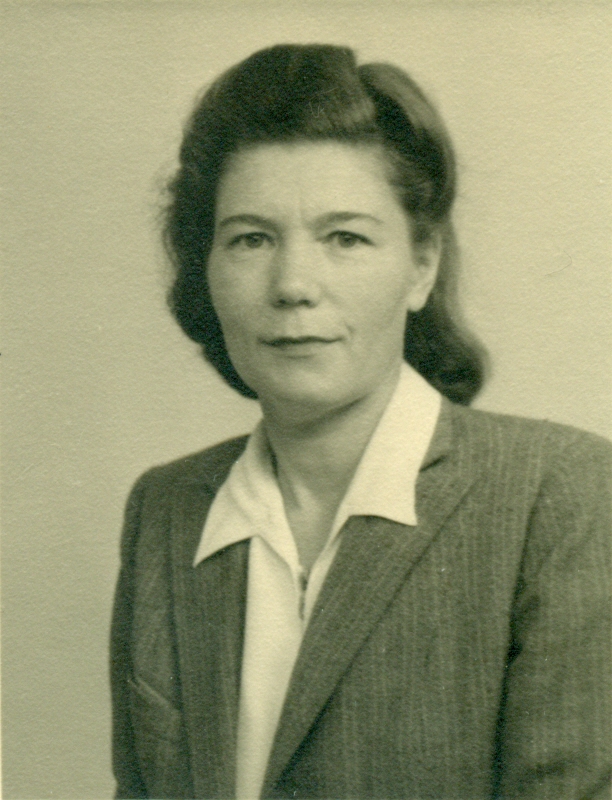
Marta Līcīte, c. 1946

My great aunt passed away last night. She was 99 years old.

She was born on June 13 (O.S.)/June 26 (N.S.), 1911, in Krustpils, Latvia. At the time of her birth, Krustpils was a border town in Vitebsk guberniya in the Russian Empire. Across the river was Jēkabpils in Kurland guberniya, now the two towns are unified under one local authority, Jēkabpils. Her parents were Brencis and Jūle (Štelmahere) Līcītis. Her godparents were Vera Namiķe, Marta Jaunzeme and Jānis Štelmahers.

When Marta was three years old, the First World War broke out. When fighting started between Germany and Russia, her family, like many other Latvian families, fled from the advancing front and settled temporarily in the interior of Russia near Rzhev. They lived with a Russian family with the surname Kislev. She learned to speak Russian and enjoyed speaking to the Russians at the market and going to the Orthodox church, even though her family was Lutheran. During this time, Marta had diptheria, and while she was very ill, she said she saw a beautiful white cat, and wanted to play with it. This inspired her to recover.

Marta and her father saw Alexander Kerensky, one of the leaders of the February Revolution and then the provisional government, speak. When the October Revolution took place and the Bolsheviks came to power, her family witnessed the local communists taking the town’s grain stores and burning them in the centre of the town square, calling it “rich peoples’ food”. The communists then gave the people animal feed to eat.

After the war was over, the family returned to their home in Latvia, though turmoil would still last for a few years until the Wars of Independence were over and Latvia established a stable, independent government. Marta’s sister, my grandmother, was born in an independent Latvia in 1919.

Marta attended primary school in Krustpils, earning good grades, excelling especially at German and drawing. She left school after her second year of secondary school and became a seamstress, continuing to live with and help support her parents while her sister went to nursing school in Rīga.

When the Second World War broke out, Marta joined the Red Cross as a nurse’s aide, and helped wounded soldiers alongside her sister. In 1944, when the Soviet front was moving closer, and remembering the first Soviet occupation, the sisters left Latvia, traveling across Eastern Europe to end up in Denmark by the end of the war. In the Displaced Persons camps, Marta met her husband-to-be Jānis Jakstāns, who was from Dobele in western Latvia. I’m not sure if they married in Denmark or upon arrival in Canada.


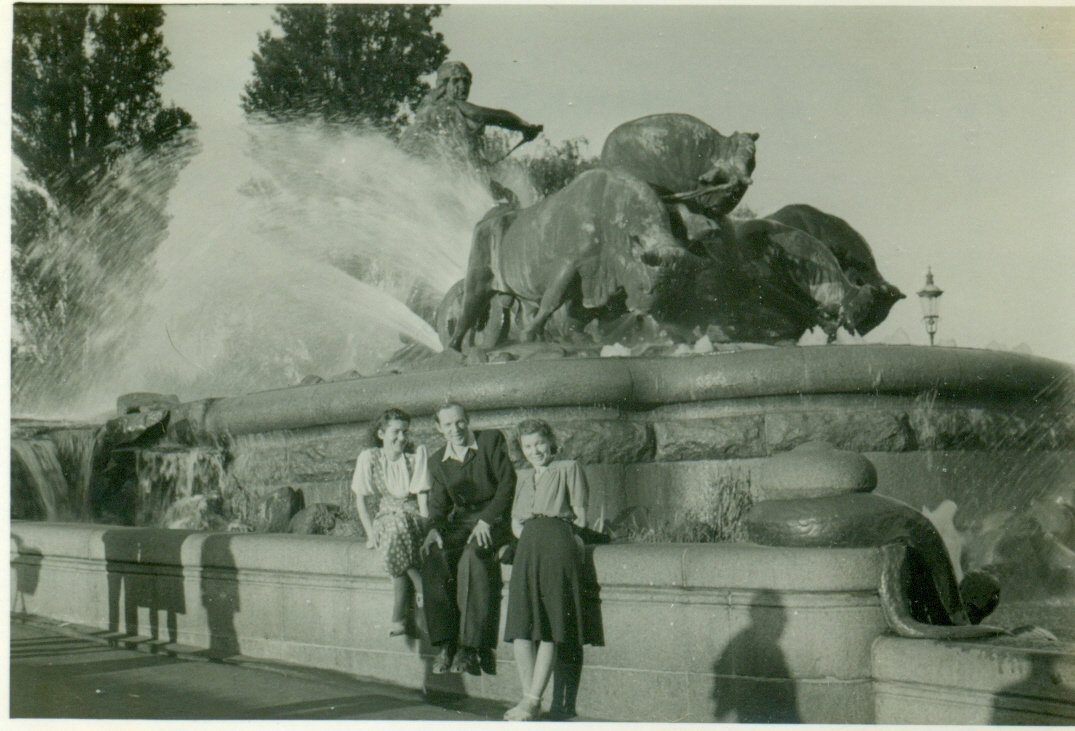
My grandmother, grandfather Aleks and great-aunt Marta by the Bull Fountain in Copenhagen, Denmark, c. 1948.

Marta and her sister traveled to Canada on the SS Samaria in 1949. I’m not sure if Jānis was with them or if he, like my grandfather Aleksandrs, followed along later. They eventually settled in the Port Weller district of Saint Catharines, Ontario. Jānis died of Creutzfeldt–Jakob disease in the late 1950s, which he had contracted from a blood transfusion after a roof tarring accident. They never had children. Marta continued living in the same house until 1993, when she and my grandmother moved to my family’s town northwest of Toronto.

When I was little, she and I “travelled” all over the world, looking at maps and a globe and choosing exotic locales that we would create adventures about. One we returned to frequently was Belém, Brazil. I will have to go there one day in her memory.

While she became legally blind in her later years, when I was young she made intricate paper flowers that decorated her home and ours. She had a fondness for drawing, especially “mushroom families” – cute little mushrooms with faces that were often personifications of my parents and I.

She had an interest in the work of Axel Munthe, whose villa in Capri my parents and I visited on her behalf when we traveled to Italy six years ago. She kept a statue of a sphinx on her bedside table, as well as a small Hotei (“Laughing Buddha”) figurine that she later passed on to my mother.

Four and a half years ago, Marta broke her hip and moved from the apartment she shared with her sister into a nursing home that was quite a distance from my family’s home, but after a year or so she was able to move to one much closer. Her sister also moved there three years ago.

Over the past few months, she had been getting weaker and weaker. Last night, she passed peacefully, as if just going to sleep. She always loved philosophizing about the world, the ways of the universe and the great beyond, so now she will have all of her questions answered.

She is survived by her sister, niece, nephew-in-law and grand-niece (me).

“Vediet mani dziedādami, Nevediet raudādami; Lai iet mana dvÄ“selÄ«te, Pie Dieviņa dziedādama.”
Latvian folksong (daina): “Escort me while singing, not while crying; May my soul go, to God while singing.”

Working With Revision Lists

A couple of weeks ago, I mentioned that the Kurland revision lists are up on Raduraksti. Good news – the Livland (Vidzeme) revision lists are up too!

Now here is your guide to making sense of these documents!

I’m going to start with just the revision lists themselves – many of them come with all sorts of supplementary documentation as well, but with the exception of the incoming/outgoing registers, these can be highly individualized to each estate or parish.

It is important to note that revision lists are based on estate, not parish. There can be numerous estates within a parish. If you know what parish your ancestors lived in, but are not sure of the estate, consult their birth record in the religious records – the first line of the record should list the estate name and farm name. If you don’t have a birth record yet, consult this map to find the estates in your ancestral parish and start going through them to find your family.

The latest revision list is for 1858. The format of the records are as follows…

Left-side page:

  1. 9th revision list family number (that is, the previous list)
  2. 10th revision list family number (current list)
  3. Names of males in the household (often including father’s name as well – be careful you don’t mix up this and the surname), the name of the farm is also indicated in this column, also numbered (but usually with a Roman numeral so as to not confuse this with the family number)
  4. Age at previous revision list, or, if not dwelling at this address, previous place of residence (and sometimes year of arrival to this address)
  5. Changed circumstances since the last revision list – such as moving to a new address since the last list was written, death, etc.
  6. Current age

Right-side page:

  1. 9th revision list family number
  2. 10th revision list family number
  3. Names of females in the household, often prefixed by relationship to male in the household (wife-Frau or daughter-Tochter), or if single woman, as an unmarried woman (Magd) or a widow (Wittwe).
  4. Changed circumstances (this can sometimes be used sparingly for women)
  5. Current age

It is important to note that in the revision lists, an individual (especially a male) could appear twice if they had moved during the time between lists. They will appear in their current home, with a notation that they moved from location X, and they will appear in location X with the notation that they have moved to the new address. People moved about frequently, especially within an estate.

The formats for the 1834 and 1850 revision lists are identical to the 1858 one, with the exception of family numbers – the family numbers (should) stay consistent between the different lists, and only changed with the 10th revision, so there is only one family number column per page.

For 1826, the format changes a tiny bit – the farm name and number now has its own column, and it is the first column on each page – also note that farms are now numbered with regular numbers, while family numbers have become Roman numerals – the family name is also now listed in the same box as family number. Any other data in the name column can pertain to things such as status (Knecht – farmhand/servant, Wirts – landowner/manager – remember the purchasing of farms from barons and other large landowners only started in earnest in the latter half of the nineteenth century, so “Wirts” may not yet indicate ownership but rather the head of the farm household), or might include items that should be in the next box over (previous place of residence, etc.).

Prior to the 1826 revision list, things can get difficult, for 1826 is the first revision list with surnames for peasants. The 1816 list does not have surnames, so one must rely on relationship markers (wife, daughter, etc.) to determine family relationships. Men and women are no longer listed on separate pages, but rather one after another on the same page. Beware of assuming that just because your ancestors lived on a farm in 1826, and there is a family with the same given names on the farm in 1816, that they are the same family. I almost fell into that trap on one estate until I noticed the notation that they had moved from another estate in the early 1820s. There was not a large variation in given names, so there could be many families with the same names, with the same ages (I’m still angry at one of my ancestors for naming his daughter the same name as his brother’s daughter when these two girls were born a month apart on the same farm).

There are earlier lists for 1811 and 1795, which have even less information than the 1816 list – usually just ages (current and previous list age, with separate columns for men’s ages and women’s ages), and the 1811 list does not usually include women.

Hopefully this guide will help you work your way through the main portion of the revision lists. More to come soon on incoming and outgoing registers – peasants were much more mobile than we may think, and these registers are key to tracing their movements.

Have you found your family in the revision lists? Share your story below!

Latvians Abroad Museum and Research Centre

I came across this initiative awhile ago, though I can’t remember where: “LatvieÅ¡i PasaulÄ“ – Muzejs un PÄ“tniecÄ«bas Centrs” (Latvians Abroad – Museum and Research Centre in English, LaPa-MPC for short).

Their goal is to create a museum in Latvia about the Latvian diaspora – Latvians who have left Latvia and settled elsewhere in the world, why they went, and what their lives were/are like. This would be complemented by a research centre focused on Latvian emigration. There are numerous museums dedicated to emigrants across northern Europe – I’ve been to two in Germany, Deutsches Auswandererhaus in Bremerhaven and BallinStadt in Hamburg – so it is about time there was one in Latvia as well!

The museum hasn’t been built yet, since they’re still working on finding a good location and raising funds. They have, however, organized some traveling exhibitions. I’m hoping to get involved with them on the emigration research and genealogy side of things. Though who knows, since I’m currently studying Applied Museum Studies – which encompasses a lot of fields including artifact preservation, display construction, collections management, exhibit design and educational programming – I might try to get involved with other facets of the museum too.

I would encourage all of you to take a look, and if you can support them in any way, whether through donation of artifacts/stories, monetary donations, membership or just getting the word out, please do!